No other woman in contemporary pop music, has achieved the sort of success Tiwa Savage attained in Africa over the course of her career. She’s rightly dubbed the African Pop Queen for good reason, as her impact on the industry and pop culture goes beyond her music catalogue but also encompasses significant metrics like fashion, aesthetics, stage craft and even her cross-artistic ventures into cinema.
Now she’s spearheading a brand new revolutionary initiative in music for African creatives, by bringing one of the world’s most foremost music programs to Lagos, Nigeria. By partnering with the Berklee College of music through her foundation, Tiwa aims to level the playing ground for aspiring artistes in this part of the world—who strive for the same standards of excellence as their global counterparts, but don’t have the opportunities to access the resources. A-T had a brief chat with Tiwa concerning her new undertaking and what exactly it means for the next generation.
20 years ago you were at the Berklee College of Music and that was a different era in music, where professionals usually mastered the innate knowledge of composition before venturing into the art. Now it’s a different time and a lot of performing artists don’t understand music on that level. Does a program like this in these times give budding acts an edge?
When I was at Berklee, we had to dig deep into the why and how of music before the world even heard us. Today, everything moves so fast, and while the talent is undeniable, that foundational knowledge is often missing. Does this program give them an edge? 100%.
Talent is universal, but access to this level of training is not. By bringing the Berklee methodology to Lagos, we’re giving people the professional musicianship and the standard of excellence that allows them to compete globally.
Afrobeats has been at the forefront of global exportation over the past couple of years and it’s experienced innumerable success in the process, but there is more to African music than the various types of African contemporary pop music that’s been grouped under Afrobeats. Does a program like this hold value in helping creatives discover their varying forms of sonic identities, that may or may not be inherently tied to the current pulse of the continent i.e Afrobeats?
Afrobeats is the rave of the moment, and I’m so proud of what we’ve built, but Africa is a continent, not a monolith. There is so much more to our sound. I want this program to show young creatives the full landscape.
Maybe you aren’t meant to be the next Afrobeats star. Maybe you’re meant to be the person who scores a global film, or the engineer who creates a sound no one has heard before. We want to help the next generation find their own sonic identities that are sustainable and meaningful, whether they fit the current pulse or they’re creating a whole new heartbeat for the continent.
The press release revealed that the tutelage at the school will not only encompass training on artistic voices and the honing of talent, but would also incorporate a business friendly curriculum that would help prepare budding artists for the challenge that lies ahead of them. We’re in an industry where there is hardly any defined formula to upscale now and even the major players are trying out new things everyday.
With the breakneck pace of a constantly evolving industry that’s forcing everyone to embrace the chaos, would it be the status quo for your college and how would your students stand out?
The industry is changing at a breakneck pace, and yes, even the majors are figuring it out as they go. But chaos in this context is only scary if you don’t have a map. My students will stand out because they’ll understand the business toolkit. We’re training the full ecosystem, theA&Rs, the publishers, the legal minds. When you understand the value chain, you can survive the chaos and lead it.
Over the course of the past two decades, you’ve had the monumental career you’ve had and become a quintessential superstar for the continent as a whole and for women too. Is there one invaluable lesson you owe to your time at Berklee, that you probably wouldn’t have achieved as much without it?
If I have to pick one, it’s that talent alone is not enough. I wouldn’t have achieved half of what I have without the structure, education, and exposure I got there. Berklee fundamentally shaped how I see music as both an art and a business. It gave me the discipline to be in a studio at 2 AM and the knowledge to understand my contracts. That’s the bridge I’m trying to build for these kids.
Is it safe to assume, that a prestige program like this involving a collaboration with your foundation and the school of Berklee would also take intentional measures in platforming the standout acts that pass through the program?
Absolutely. We are being very intentional with this. We’ll be offering scholarship awards and tailored guidance to select individuals, so they can advance through Berklee’s programs in Boston or online.
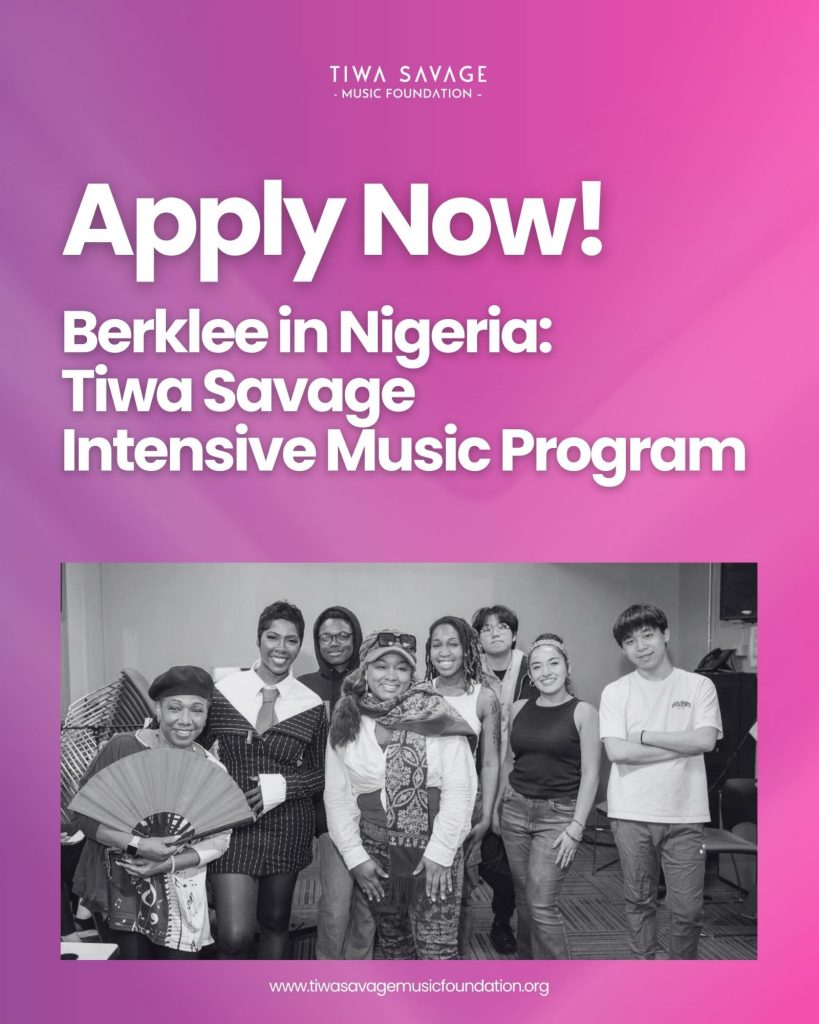
As regards helping the ecosystem, this project seems to be bringing in different music folks from different denominations together to work on a profound project. But this is a common recurring theme with recording camps and talent hunts. What makes the environment at Berklee different?
I’ve seen many talent hunts and camps, and they have their place but our goal is to make history with this initiative. Berklee is bringing in their professors to West Africa and delivering their curriculum here for the first time ever. The same standards that shaped legends like Quincy Jones and Aretha Franklin, will be shaping our next generation of artists. We’re removing the $40,000+ tuition barrier and investing in the real people who make the magic happen.